

Content Pillars Explained: How to Build a Strong Content Strategy
We know how frustrating it can feel to pour time and effort into content that just doesn’t land. It’s rarely because the content is bad. More often, it’s a clarity problem. The right message isn’t reaching the right people at the right time.
Posting sporadically, chasing every new trend or creating content simply to tick a box rarely leads to consistent results. That approach is exhausting. And ineffective. This is exactly where content pillars come in.
Content pillars give your content focus and direction. They help you create work that is relevant to your audience, aligned with your business goals and designed to perform over the long term, not just for a fleeting moment in the feed.

What are content pillars?
Content pillars are the core topics or themes your brand consistently talks about. They form the foundation of your content strategy and act as a filter for what you create, share and prioritise.
Strong content pillars align your content with your mission and values, keep your messaging consistent and help demonstrate your expertise in a way that feels natural rather than forced. Instead of constantly wondering what to post next, your pillars give you a framework that brings clarity, confidence and consistency to everything you do.
Why content pillars matter
Clear content pillars help you:
– Increase organic traffic to your website
– Rank higher in search engine results pages (SERPs)
– Establish authority and trust
– Support your audience at different stages of the funnel
– Build awareness with new audiences
Search engines favour clarity and consistency. So do people. Content pillars give you both.

Content pillars and search intent
Content pillars should be built with search intent in mind.
This means understanding what your audience is searching for and why. Most businesses benefit from three to five content pillars, enough to show depth without diluting your message.
Keyword research is a crucial starting point. Tools like SEMrush, Ahrefs or Google Search Console can help you identify:
– Relevant topics
– High-intent keywords
– Questions your audience is already asking
Your pillars should sit at the intersection of audience needs, business goals and genuine expertise.
Content types that support your pillars
Once your pillars are set, your content should show up in a mix of formats. Most content falls into four broad categories:
– Promotional: case studies, testimonials, advertorials.
– Educational: blogs, guides, infographics, how to videos.
– Inspiring: behind-the-scenes content, brand stories, client wins.
– Entertaining: polls, interactive or light-touch content
Your pillars stay consistent, the format can flex.

Creating, distributing and reviewing content
The focus should always be on creating high-quality content that genuinely supports your pillars, then distributing it across your owned, earned and paid channels. Repurposing content wherever possible helps maximise value, while regular performance reviews using tools like Google Analytics and platform insights allow you to understand what is working and where to refine. Content pillars provide structure, but the strategy should evolve as the data does.
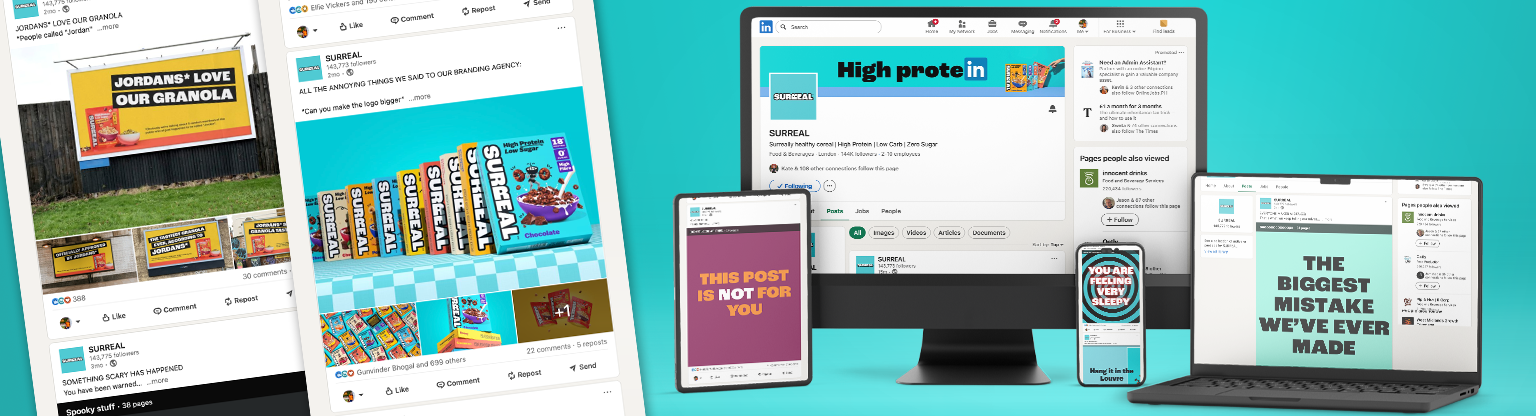
A real-world example: Surreal Cereal
Surreal Cereal is a great example of clear content pillars in action. Their content consistently focuses on a small set of themes, nutrition and healthy eating, particularly high-protein benefits, performance and lifestyle, supported through athlete spotlights and partnerships, and a challenger mindset that questions traditional breakfast norms.
These pillars give their content structure and direction. The bold humour, sharp copy and distinctive visuals then bring those themes to life, resulting in content that feels cohesive, recognisable and purposeful.
Turning strategy into action
Strategy is only powerful when it shows up consistently. Our LinkedIn packages are designed to turn clear content pillars into on-brand, purposeful social content that reaches the right audience, builds trust and supports your wider business goals, without the guesswork or last-minute scramble.